



photo from Yamaha Philippines
At a glance, it’s easy to get it twisted. You’ve got a full-face MTB helmet in your gear locker, and you’re heading out for a quick ride on your motorcycle or scooter. It looks rugged. It’s got a chin bar. It’s even got that aggressive trail-rider silhouette. So why not use it for motorized rides?
Here’s why: it might look similar, but that helmet wasn’t built for speed, impact, or survival on a motorcycle. And when it comes to helmet safety guidelines, “close enough” doesn’t cut it.
Different Rides, Different Forces

Let’s start with the obvious. Riding a mountain bike—even bombing down enduro lines—is a completely different experience from straddling a motorcycle. The speeds are worlds apart. A downhill MTB run might hit 30-50 km/h on fast terrain. But even a small-displacement motorcycle easily pushes 60–100 km/h on everyday roads—and more if you’re riding expressways.
More speed means more force on impact. A crash at motorcycle speeds exerts significantly more energy on your body—and your helmet. That’s why motorcycle helmets are designed to withstand brutal, high-speed trauma. MTB helmets, even full-face ones, just aren’t rated for that kind of punishment.
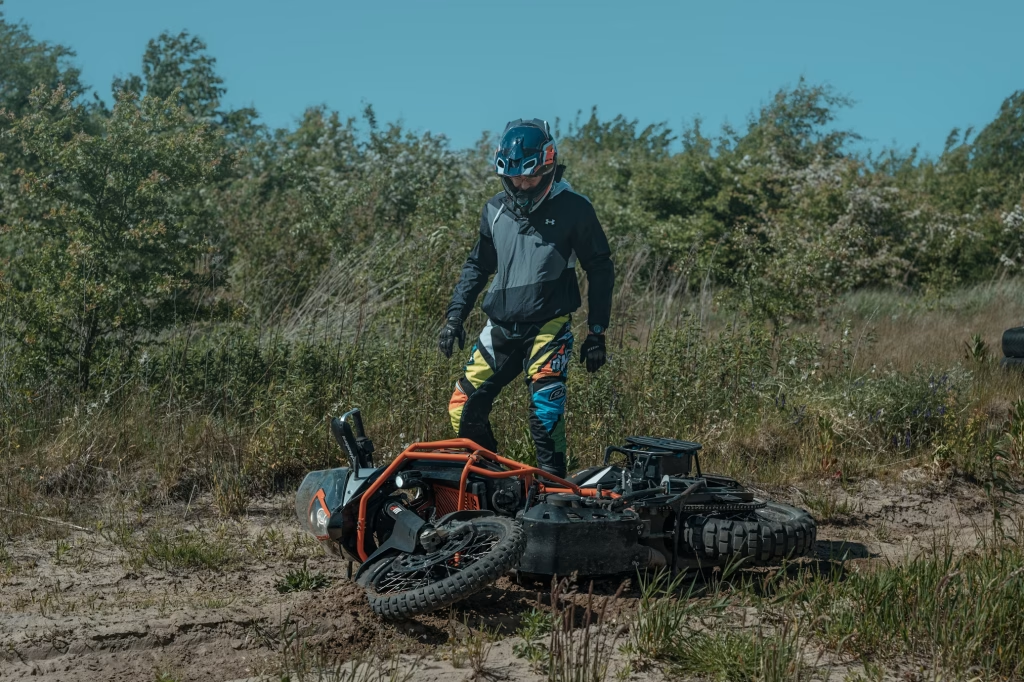
Helmet Safety Standards: The Tech That Separates Them
Let’s break down the helmet tech:
MTB Helmets: These are built light. Most feature EPS foam liners with outer shells made of polycarbonate or composite materials. The ventilation is generous, the design favors weight savings and breathability. They’re optimized for climbing, descending, and hitting the ground at lower speeds—usually in dirt, gravel, or rock environments. Some incorporate MIPS or other rotational-impact systems, but MTB helmet certifications still assume a lower-energy crash.

Motorcycle Helmets: These are tanks by comparison. They feature much denser EPS liners, multi-layer composites, fiberglass, carbon fiber, and even Kevlar in some cases. They pass rigorous helmet safety standards like DOT, ECE, or Snell certifications—standards designed specifically to simulate high-speed crashes on asphalt, concrete, and other hard surfaces. A motorcycle helmet’s chin bar is reinforced to absorb serious impact. Visors are shatterproof. Padding is more robust. Retention systems are overbuilt.
The bottom line: they’re not just different categories. They’re different planets.

Motorcycle Crash Protection: Situations Matter
Think about the environment. When you crash on a mountain bike, you’re usually surrounded by nature—rocks, roots, trees, and maybe other riders. Your worst-case scenario is bad, yes—but it rarely involves skidding across asphalt at 80 km/h.
Motorcycle crashes introduce a whole different set of risks: sliding across pavement, hitting cars, guardrails, posts, or worse. The impact angles, surfaces, and kinetic forces are far more violent. That’s why motorcycle helmets are heavier and hotter—they’re designed specifically for motorcycle crash protection when everything goes wrong.
The Illusion of Similarity
A full-face MTB helmet might fool the untrained eye. It might even fool you if you’ve never taken a close look at both side by side. But even the lightest motorcycle helmet will feel heavier, denser, more sealed. That’s by design. It’s not overbuilt—it’s correctly built for the job.

And here’s the thing: a lot of trail riders are also moto riders. It’s tempting to double up on gear, especially when you’re traveling light. But no matter how cool your MTB helmet looks, it won’t save your head at highway speeds.
Proper Riding Gear: Risk Isn’t the Same As Preparedness
Let’s be clear—riding is risky. We all take calculated risks every time we throw a leg over a bike, whether it’s pedal-powered or motor-powered. But preparedness is what keeps those risks from turning into disasters.
Wearing an MTB helmet on a motorcycle isn’t just risky—it’s irresponsible. Not just to yourself, but to everyone who rides with you, shares the road with you, and cares about you. Proper riding gear exists for a reason. Use the right tool for the job.

Final Word
Look, we get it. Helmets are expensive. You might already have a great one for the trail. But don’t confuse compatibility with compromise. Just because it fits your head doesn’t mean it’s fit for the ride.
Respect the ride. Respect your brain. MTB helmets belong on trails. Motorcycle helmets belong on the road. Never swap the two. Because out there, when things go wrong, your gear is the last thing between you and the pavement. And when that moment comes, you’ll want the real thing.
Discover more from Sendr
Subscribe to get the latest posts sent to your email.